
.jpeg)
History, Trade, and Science Diplomacy in Türkiye-Italy Relations Converged in Istanbul
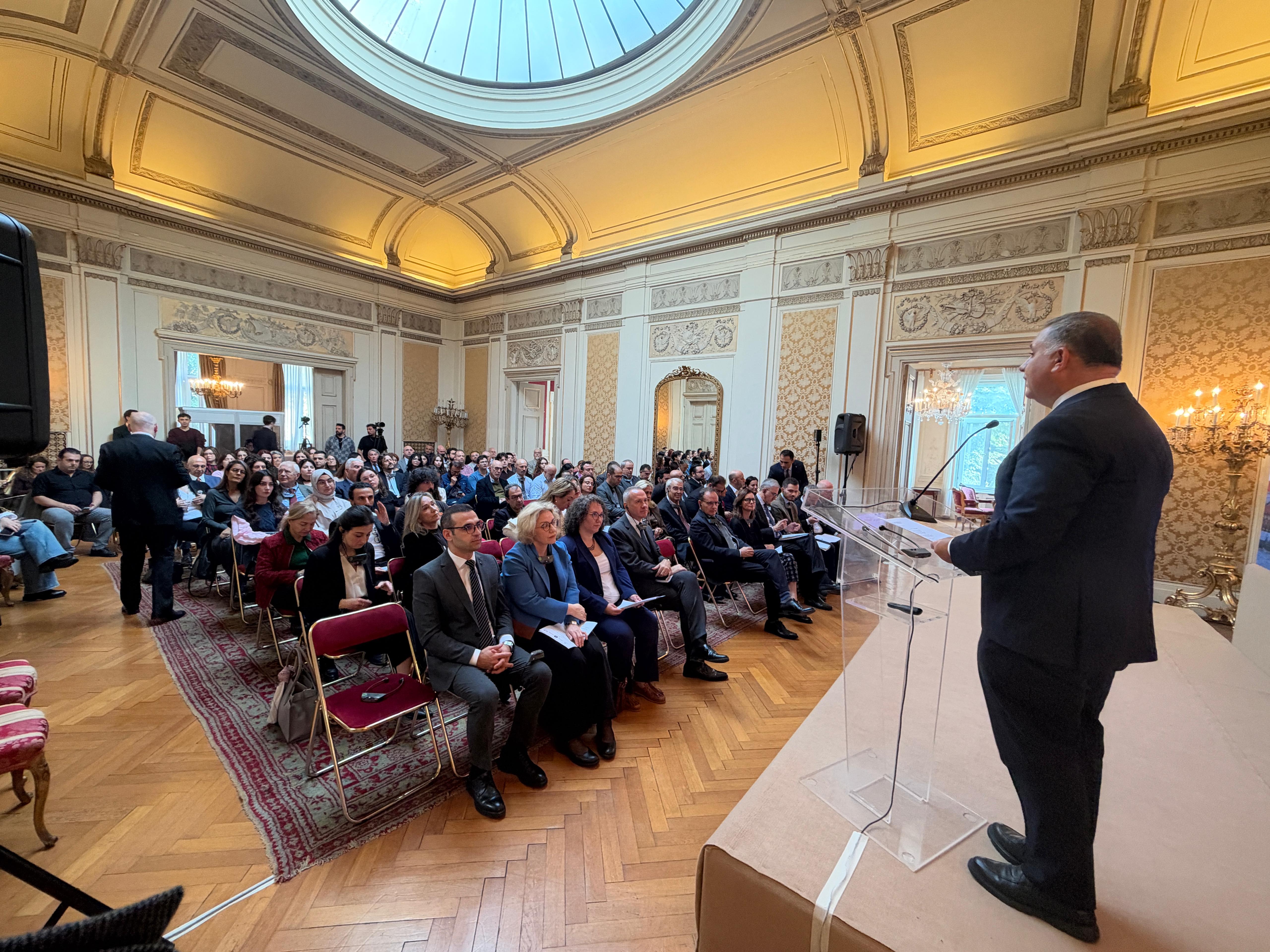
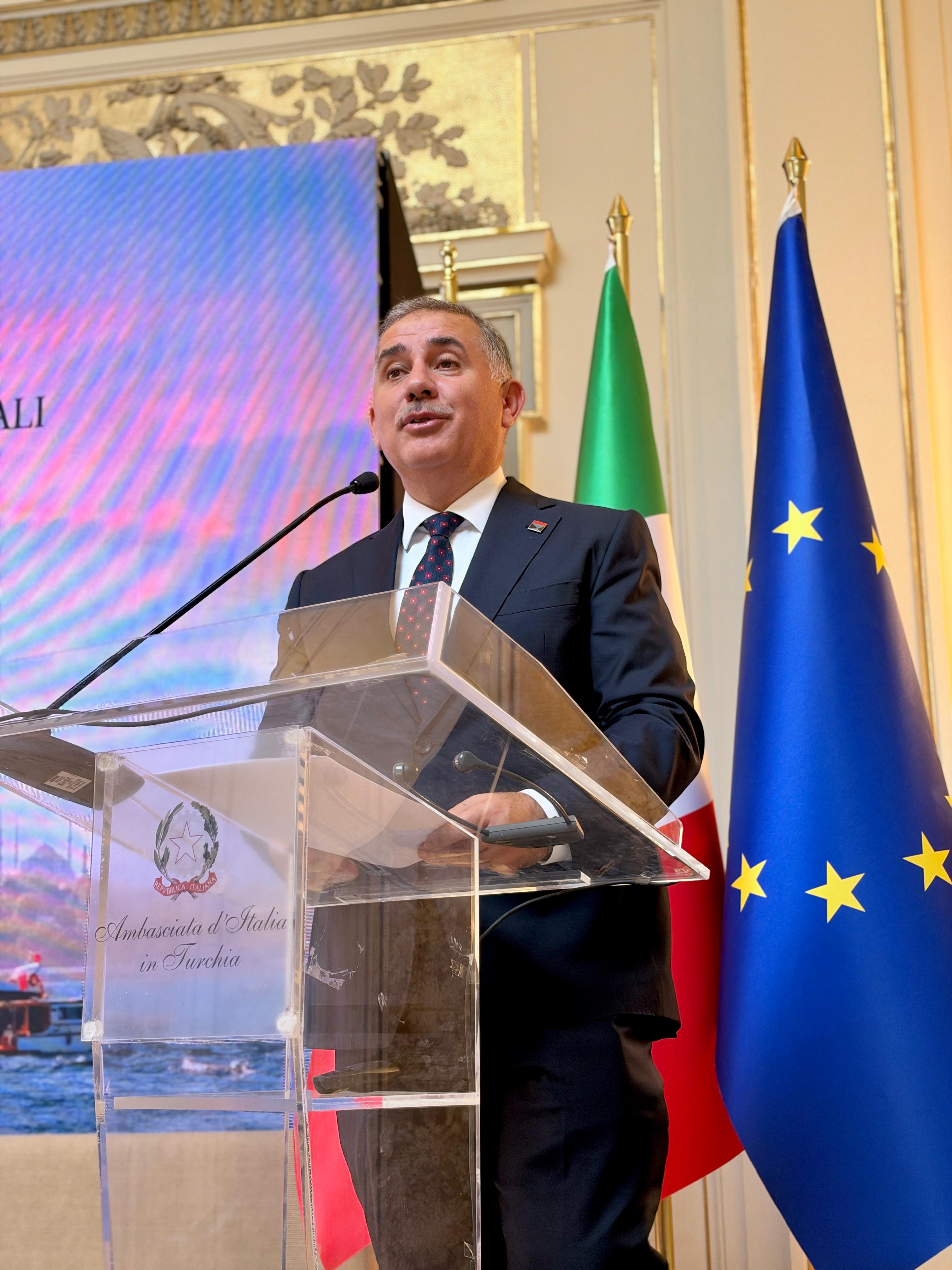
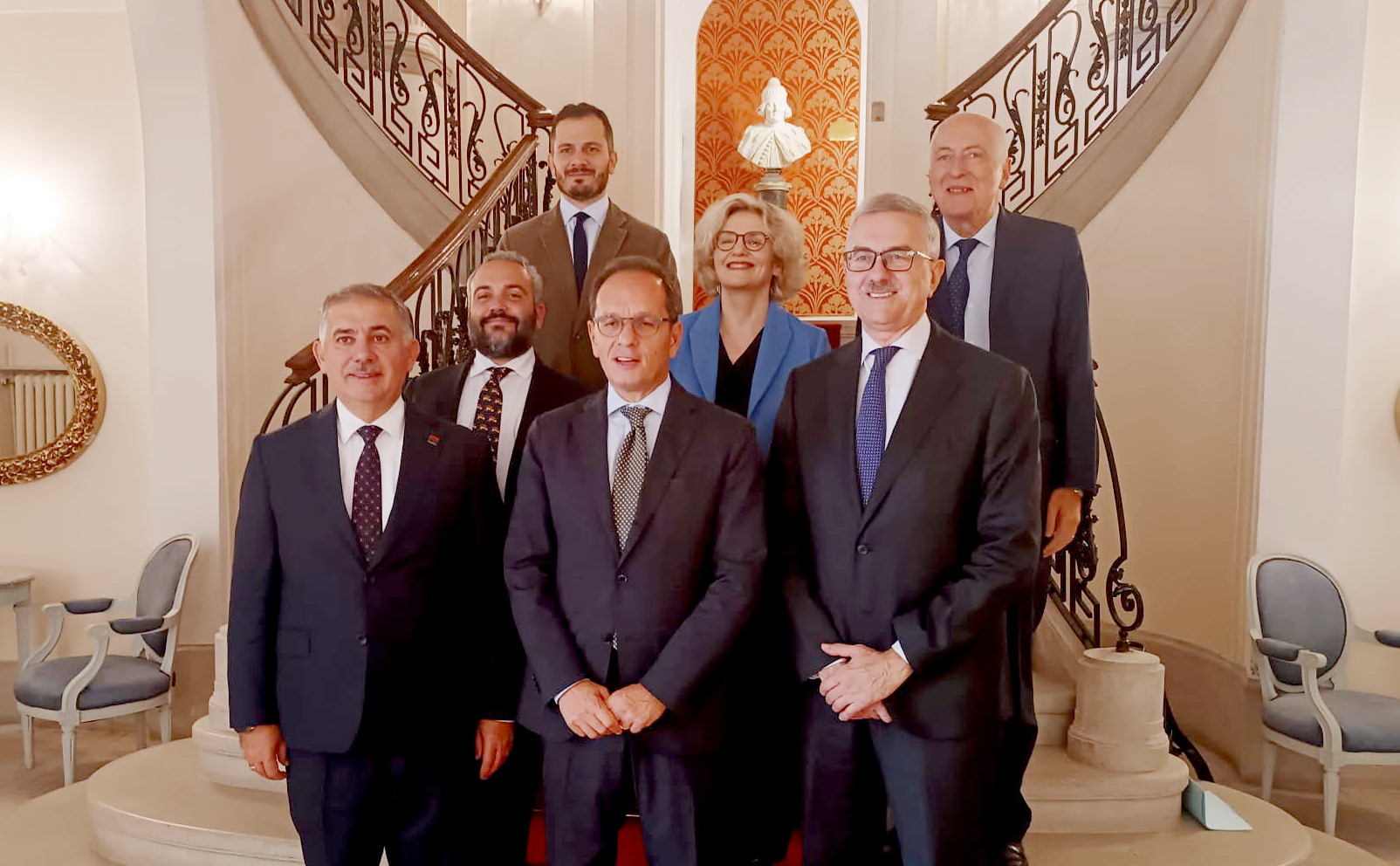
Prof. Dr. İsmail Koyuncu, TÜBA Council Member and former Rector of Istanbul Technical University (İTÜ), participated in the event titled "Türkiye-İtalya Ekonomik ve Ticari İlişkileri: Tarihsel Perspektif", (Türkiye-Italy Economic and Commercial Relations: A Historical Perspective), held at the Palazzo di Venezia in Istanbul, on behalf of TÜBA President Prof. Dr. Muzaffer Şeker. At the opening of the program, Italy’s Ambassador to Türkiye, Giuseppe Manzo, and Prof. Dr. İsmail Koyuncu delivered protocol speeches.
Koyuncu began his speech by conveying the greetings and best wishes of TÜBA President Prof. Dr. Muzaffer Şeker. He emphasized that relations between Türkiye and Italy are not limited to today’s diplomatic contacts and commercial agreements, but are rooted in a multi-layered history nourished by the shared history of the Mediterranean, trade networks that have developed over the centuries, and cultural interactions. He highlighted the historical evolution of relations between the two countries, ranging from the capitulations of the Ottoman period to 19th-century commercial and financial ties, and from 20th-century political and economic transformations to current collaborations.
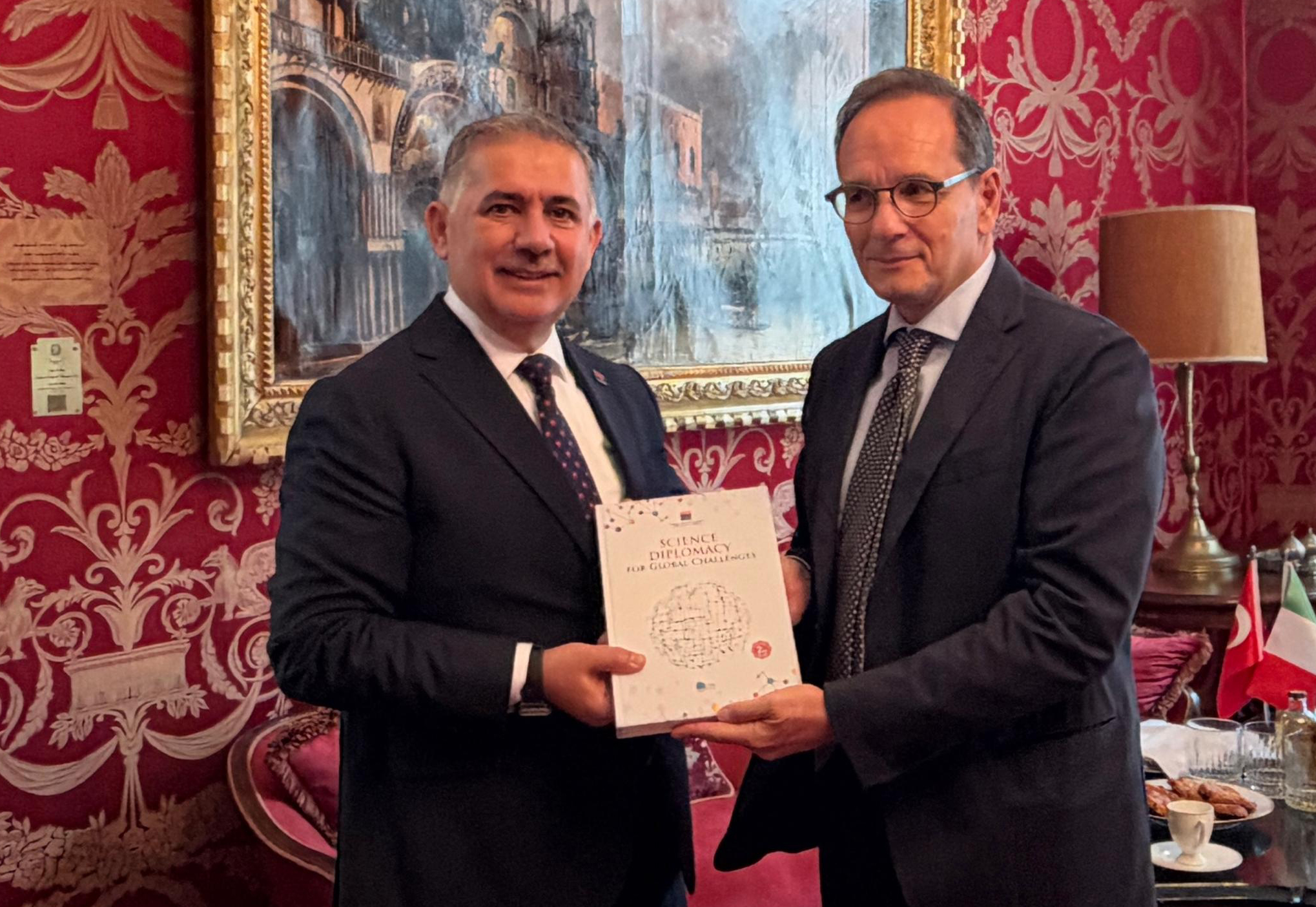
Describing the Ankara Agreement, signed in 1963 between Türkiye and the European Economic Community, as one of the key turning points in the development of these relations, Koyuncu noted that today the two countries are collaborating in numerous fields, including industry, energy, transportation, the defense industry, technology, tourism, scientific research, and innovation. In his speech, Prof. Dr. Koyuncu also highlighted the importance of historical documents in understanding the relations between the two countries and shared with the participants the work titled Reports of the Italian Ambassadors (1512–1789), published by TÜBA. Noting that the work, prepared using historical documents and diplomatic reports preserved in the archives of Venice and the Vatican, sheds light on the political, economic, social, and cultural dimensions of Ottoman-Italian relations. Koyuncu stated that researching historical and cultural heritage using scientific methods and passing it on to future generations is among TÜBA’s fundamental responsibilities. Placing special emphasis on the development of academic and scientific collaborations between Türkiye and Italy, Koyuncu spoke about the European Union-funded Water4All project he participated in in Rome, providing information on research into wastewater recovery and its long-term impacts. Koyuncu noted that they have also submitted new project proposals with their Italian partners and emphasized the importance of increasing collaborative efforts among universities, science academies, and research centers. Referring to TÜBA’s relations with Italy’s Accademia Nazionale dei Lincei and their joint efforts at the Science-20 meetings, Koyuncu noted that he also considered the Memorandum of Understanding signed between the two countries’ science academies to be valuable. Noting that science diplomacy is one of the key tools for strengthening relations between countries, Koyuncu stated that international scientific collaborations will play a decisive role in addressing global challenges such as climate change, the protection of water resources, energy security, sustainable production, digital transformation, and artificial intelligence. Within this framework, he also mentioned the World Science Forum (WSF), scheduled to be held in Istanbul on March 19–20, 2027, hosted by TÜBA, and expressed his hope that academic relations between Türkiye and Italy would translate into joint contributions at such international platforms.
Following the opening remarks, Gaetano Sabatini (Italian Institute for Modern and Contemporary History) discussed Ottoman capitulations in the field of trade during the modern era, while Giampaolo Conte from Roma Tre University addressed commercial and financial relations between Italy and the Ottoman Empire in the second half of the 19th century. Ebru Boyar from Middle East Technical University (METU) gave a presentation on Guillaume de Bondini and the newspaper La Turchia / La Turquie in late-Ottoman Istanbul, while Alessandro Albanese Ginammi from the University for Foreigners of Perugia assessed Italy-Türkiye trade relations and the 1963 Association Agreement with the European Economic Community. Lelio Lapadre from the Center for Regional Integration Studies at the United Nations University in Bruges shared perspectives on the current state and future of trade relations between Türkiye and Italy within the context of the European Union’s foreign relations. Gaetano Sabatini delivered the closing remarks for the program.
.jpeg)
.jpeg)
.jpeg)
.jpeg)
.jpeg)