


“Reports by the Italian Ambassador” Eyewitness Accounts of Ottoman-Venetian Relations
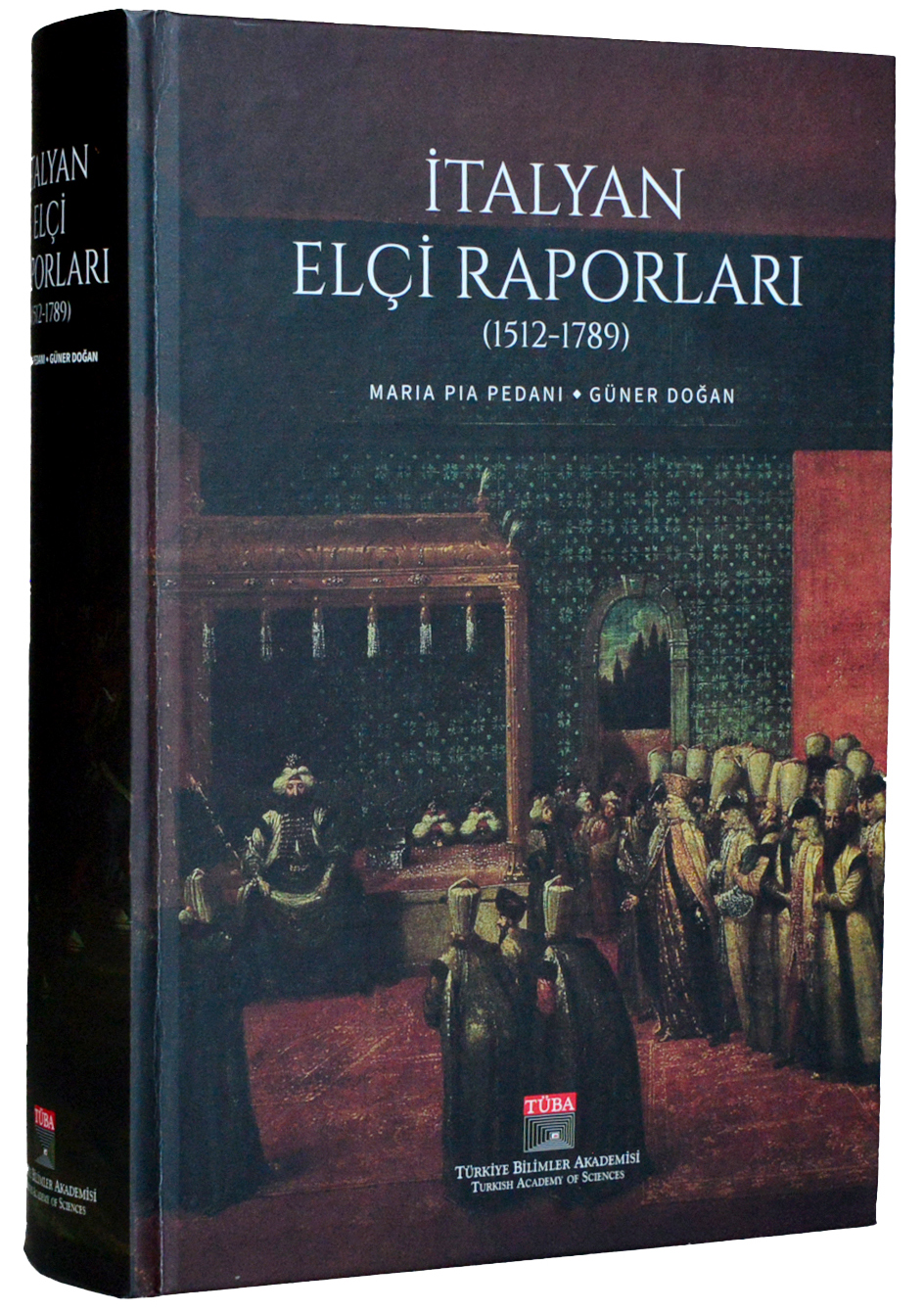 Published by TÜBA, “Italian Ambassadorial Reports (1512–1789)”—compiled by Prof. Dr. Maria Pia Pedani and Assoc. Prof. Dr. Güner Doğan and translated from Italian into Turkish by Dr. Volkan Dökmeci—has been introduced to the academic world as a source of great importance for research on Ottoman history. The linguistic editing of the work was undertaken by Prof. Dr. Nevin Özkan, a faculty member of the Department of Italian Language and Literature at Ankara University.
The book contains detailed reports submitted by 26 Venetian ambassadors who served in Ottoman Istanbul to their respective governments at the end of their approximately three-year terms. Recognized as among the most important documents in the history of diplomacy, these reports provide firsthand accounts of the political, military, social, and cultural structure of the era. As a work translated into Turkish, it serves as a pioneering contribution not only to the history of Ottoman diplomacy but also to source publication efforts in Türkiye.
A New Gateway for Research on Turkish History
Assoc. Prof. Dr. Güner Doğan emphasized that ambassadorial reports are unique sources, stating, “We cannot compare these texts, written by ambassadors—who are key actors in diplomacy—to any other type of document. These documents are, in every sense, first-hand sources.”
Highlighting that the publication of source texts is one of the most critical issues in Turkish historical research, Doğan noted that while significant importance has been placed on the publication of Turkish-language sources since the early years of the Republic, efforts regarding the publication of documents in foreign languages are still in their initial stages.
A Unique Resource for Many Disciplines
The work provides important data not only to historians but also to scholars working in many different fields, such as art history, archaeology, urban architecture, music, military history, politics, and diplomacy. The reports, which contain observations on Ottoman Istanbul, offer fascinating details across a broad spectrum, ranging from daily life to state administration.
Noting that there are numerous documents related to Turkish history in Western archives, particularly in Italian archives and libraries, Doğan pointed out that only a limited portion of these documents has been published to date. Doğan stated that they have been conducting research in various archives and libraries in Italy for approximately 16 years, adding that translating certain documents into Turkish has now become a necessity.
In this context, reports by Venetian diplomats who served as “bailo” or ambassadors in Istanbul from the early periods onward have been compiled from various archives and libraries, translated into Turkish, and prepared for publication.
Four Years of Meticulous Research
Providing information on the preparatory phase of the study, Assoc. Prof. Dr. Güner Doğan noted that he had conducted research for many years in Venice, as well as in Bologna, Genoa, and Naples. He stated that, with scholarships from Türkiye and Italy, he had focused particularly on the State Archives of Venice, and noted that he had most recently continued his work at the State Archives of Naples as part of a project supported by TÜBİTAK.
He stated that he was greatly influenced by the work of Prof. Dr. Maria Pia Pedani, an expert on Ottoman-Venetian relations and one of his advisors during his doctoral studies at Ca’ Foscari University. Doğan noted that Pedani frequently referred to the reports of Venetian ambassadors in her research and emphasized that the work they translated is one of the late historian’s most significant contributions. Doğan explained that he conducted his postdoctoral research at the Sorbonne University under the supervision of Prof. Dr. Lucien Bély with a scholarship from the French Government. Emphasizing the extraordinary importance of Italian archives for Turkish history, he stated, “Among these crucial documents, the ambassadorial reports we have translated are of the utmost importance.”