


New Publication from TÜBA Sustainable Economy and Finance in the Age of Global Transformation
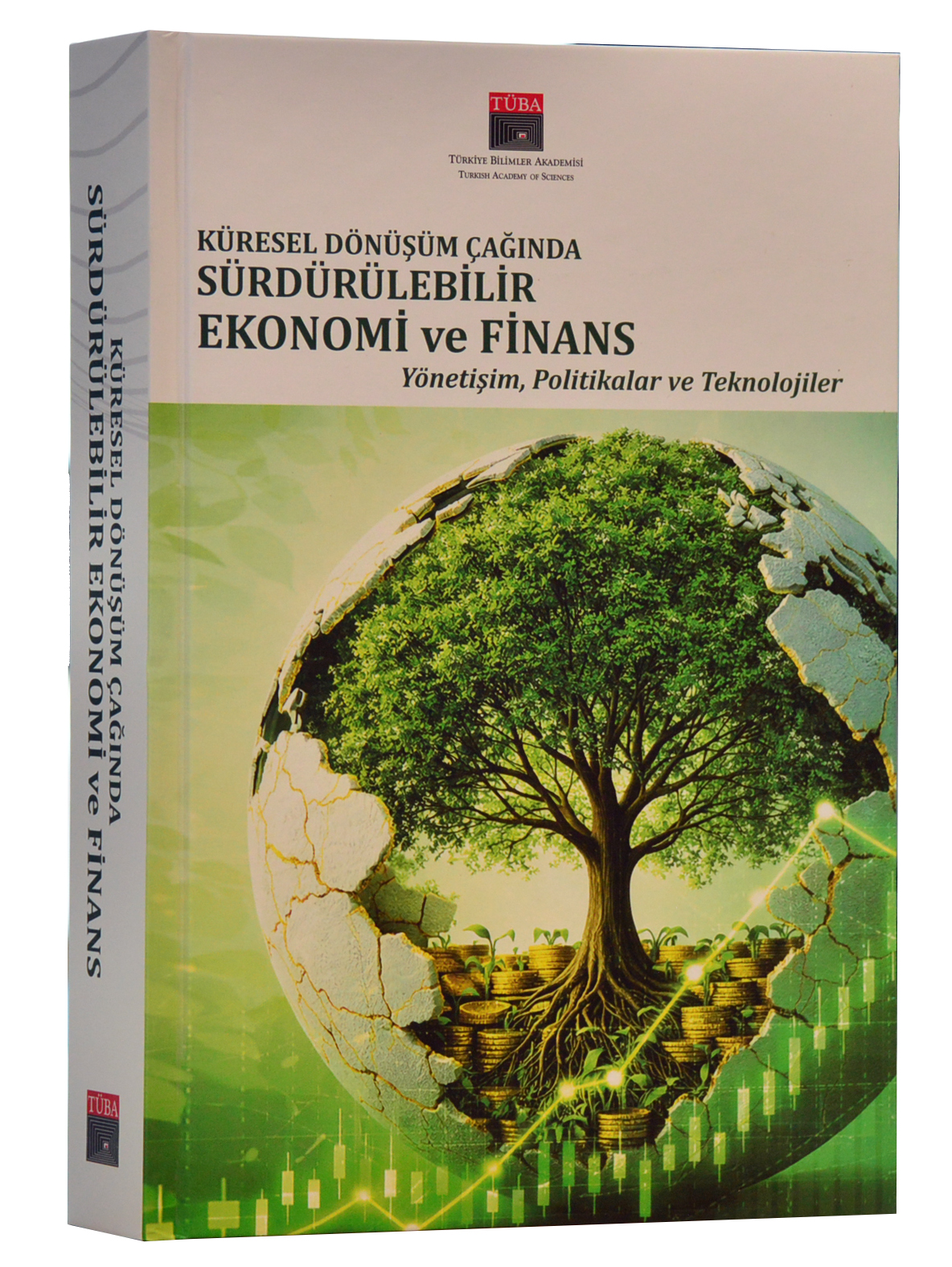 TÜBA has published a new work titled Sustainable Economy and Finance in the Age of Global Transformation: Governance, Policies, and Technologies, which addresses the sustainability agenda from an economic and financial perspective. Edited by Prof. Dr. Mehmet Bulut and Assoc. Prof. Dr. Cem Korkut, the book aims to contribute to current discussions on the economic and financial dimensions of sustainability within an interdisciplinary framework.
The work is a comprehensive study shaped by contributions from experts in different disciplines, evaluating theoretical approaches and empirical findings together. Focusing on the interdependent structure of environmental, economic, and social issues, the book aims to contribute not only to academic literature but also to decision-making and policy design processes with a data and analysis-based perspective. It covers a wide range of topics, from theoretical frameworks to macroeconomic policy discussions, green transformation and innovation-finance relationships to digital inclusivity and ethics-based approaches. In this respect, the work has the potential to be an important reference source for researchers, public institutions, the financial sector, and all stakeholders working in the field of sustainability.
Stating that the work is a product of TÜBA's mission to encourage interdisciplinary scientific knowledge production and provide guidance to the public and decision-makers, TÜBA President Prof. Dr. Muzaffer Şeker emphasized that sustainability has become one of the most critical concepts of the 21st century. He emphasized that climate change, the depletion of natural resources, increasing social inequalities, fragile financial structures, and rapid technological transformations necessitate a reassessment of development strategies and governance approaches. He stressed that solving these problems requires global cooperation and comprehensive policy sets beyond national efforts.