

TÜBA Member Prof. Dr. Gürsan Discussed Biosensors for Food and Water Security at COP31
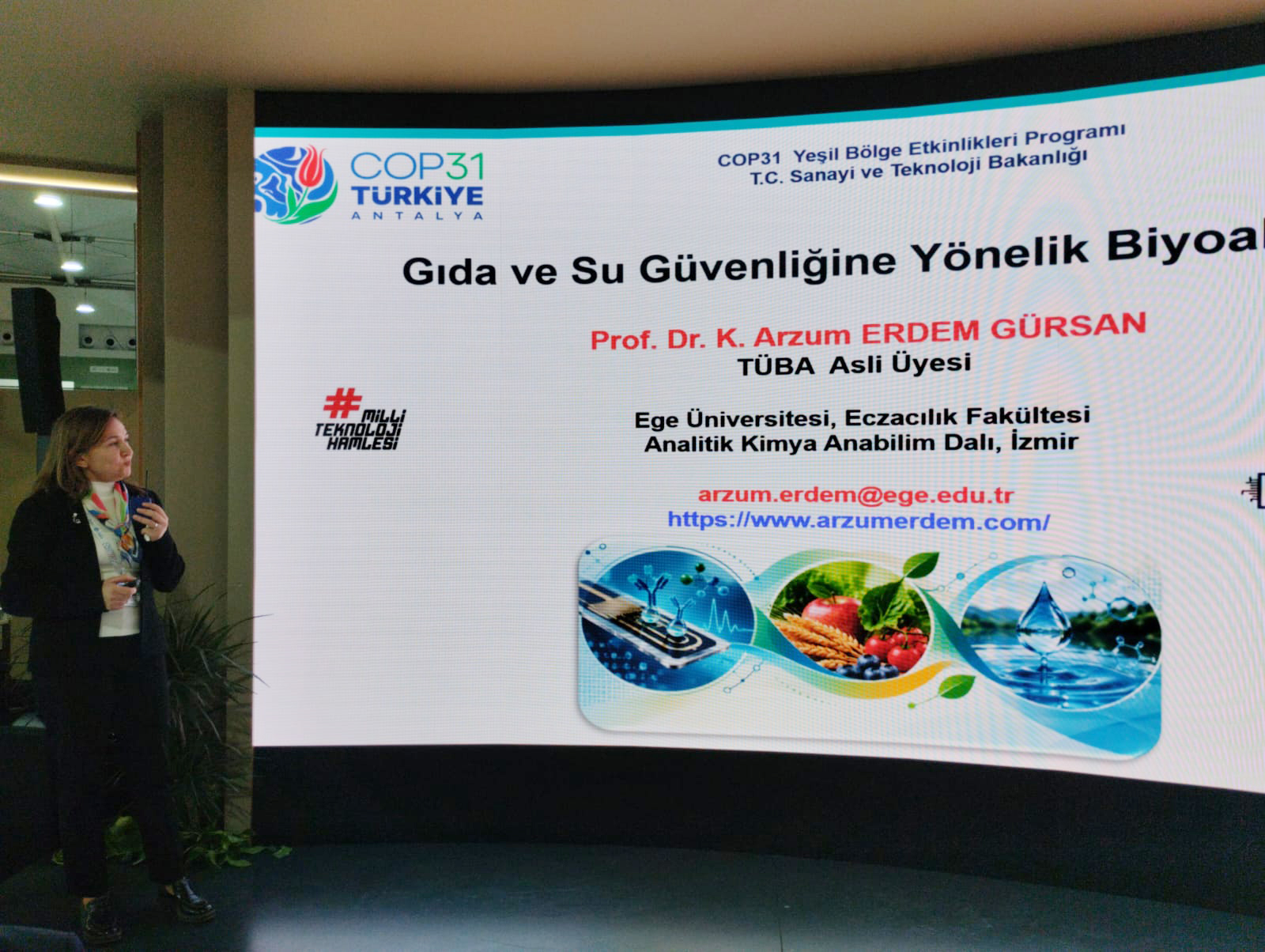
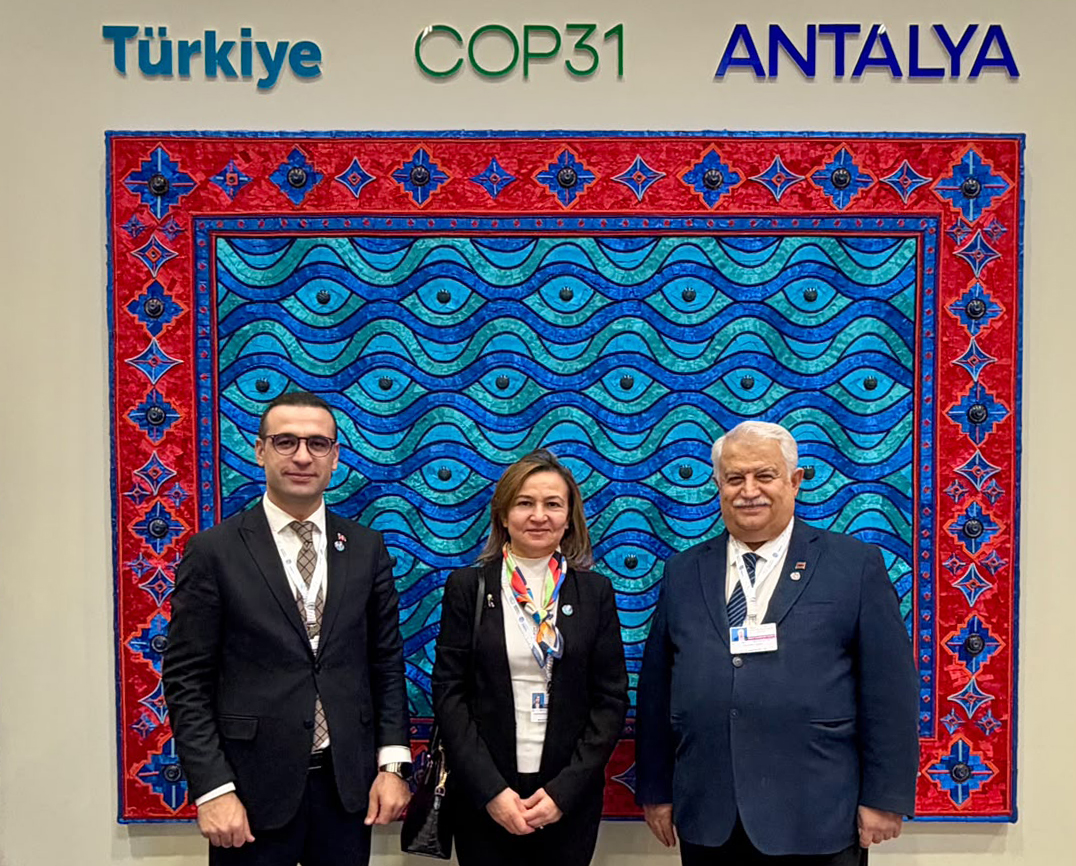
At the “Food, Agriculture, and Health” session held in the Green Zone as part of COP31, TÜBA Full Member Prof. Dr. K. Arzum Erdem Gürsan addressed the impacts of climate change on food and water security and the opportunities offered by biosensor technologies developed in this field in her presentation titled “Biosensors for Food and Water Security" (Gıda ve Su Güvenliğine Yönelik Biyoalgılayıcılar).
During the session organized by the Ministry of Industry and Technology, Prof. Dr. Gürsan highlighted how climate change affects agricultural production, water quality, and people’s risk of exposure to food and water related hazards through changes in temperature and precipitation patterns. In the presentation, delivered within the framework of COP31’s agenda on climate change adaptation and sustainable agriculture, the role that biosensors could play in the early detection of potential hazards in food and water resources was evaluated.
Providing information on the operating principles of biosensors, Prof. Dr. Gürsan explained that these systems, which convert the interaction of biological recognition elements such as aptamers, antibodies, or enzymes with target substances into measurable signals, can be used to detect mycotoxins, pathogens, pesticides, and antibiotic residues. During the presentation, current research and application examples were shared regarding the detection of mycotoxins such as zearalenone, patulin, and aflatoxin B1, as well as pesticides, antibiotic residues, and pathogens, within the scope of food safety. Under the heading of water safety, sensor-based approaches for the detection of heavy metal ions and pharmaceutical residues, as well as commercial systems used to monitor microbial contamination, were discussed. In particular, it was emphasized that portable readers and smartphone-enabled measurement technologies could enable rapid screening for food- and water-borne hazards even under non-laboratory conditions. Prof. Dr. Gürsan pointed out the importance of evaluating performance criteria such as selectivity, matrix effect, recovery, and repeatability on real samples to ensure these technologies can provide reliable results in the field. She also stated that comparing the obtained results with appropriate reference methods is crucial for establishing the reliability of biosensors and translating them into practical applications.
During the session held as part of the “Food, Agriculture, and Health” program at COP31 Green Zone, topics including agricultural and food security, irrigation and water efficiency, food systems, climate change, and health were discussed with contributions from various institutions and experts. Representatives from the TÜBİTAK Marmara Research Center (MAM), HEKTAŞ, and the Turkish Standards Institute (TSE) also gave presentations during the program.