

President Şeker Discussed the Role of Science Academies in Climate and Health Policies at COP31
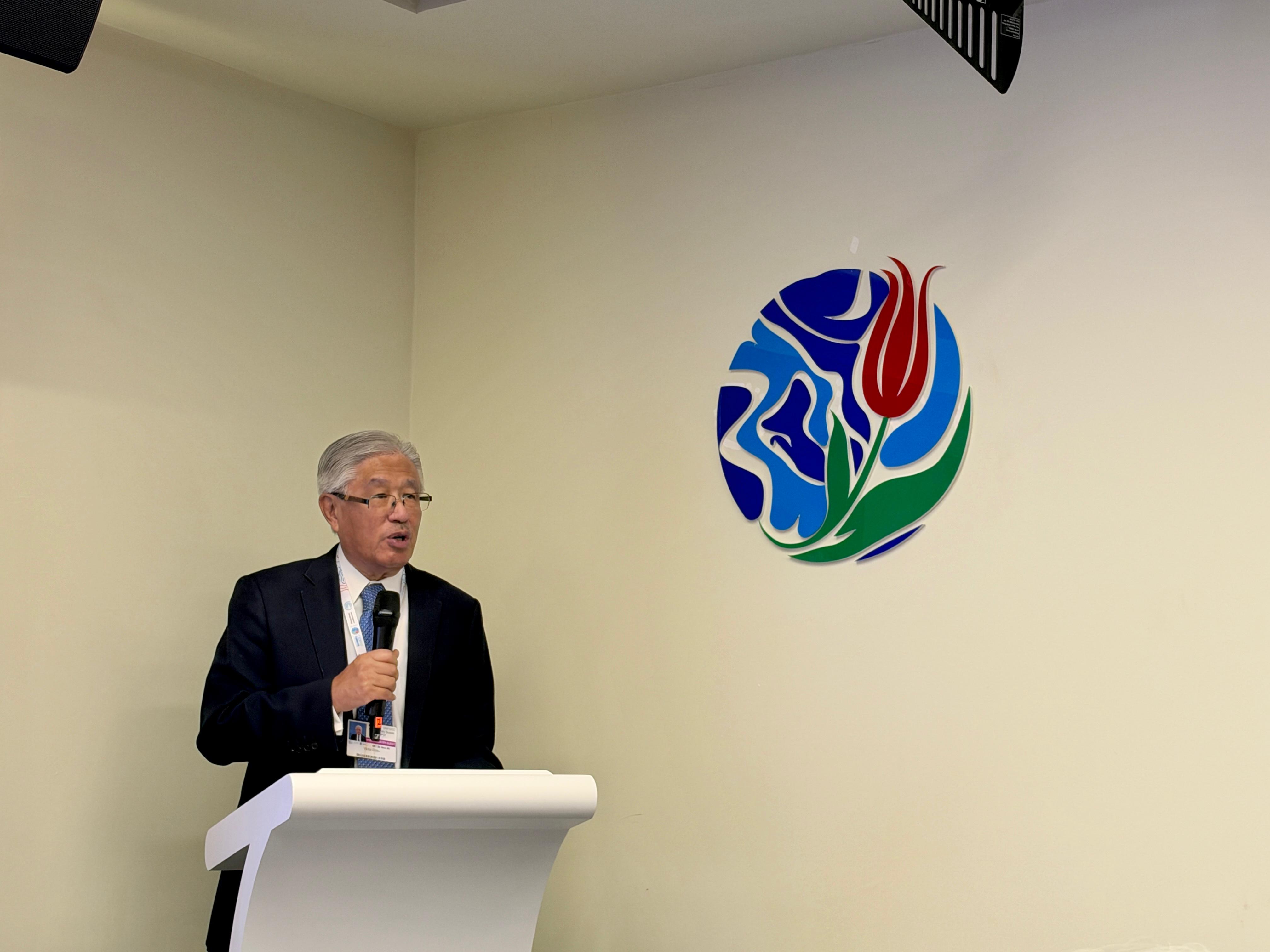
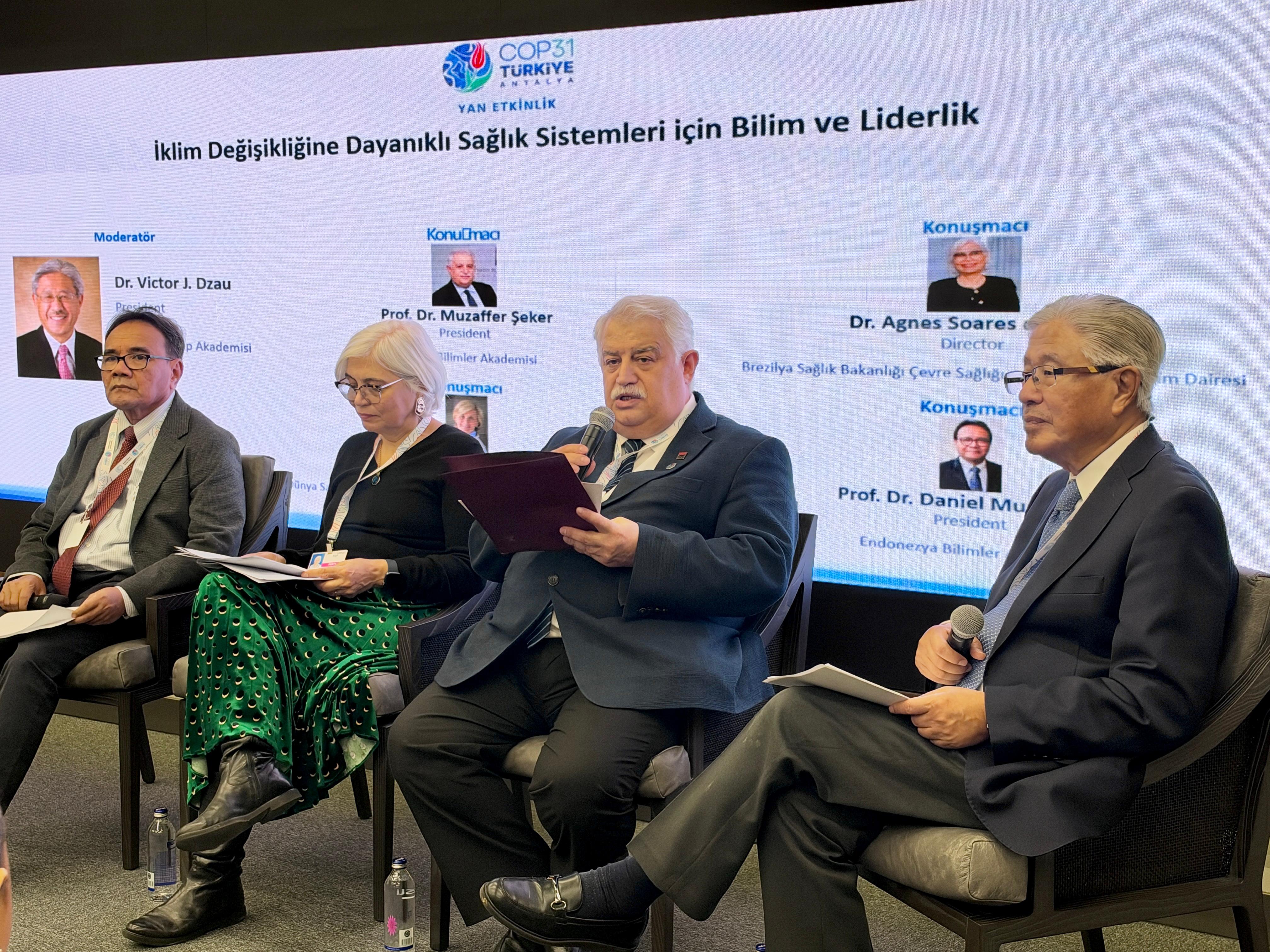
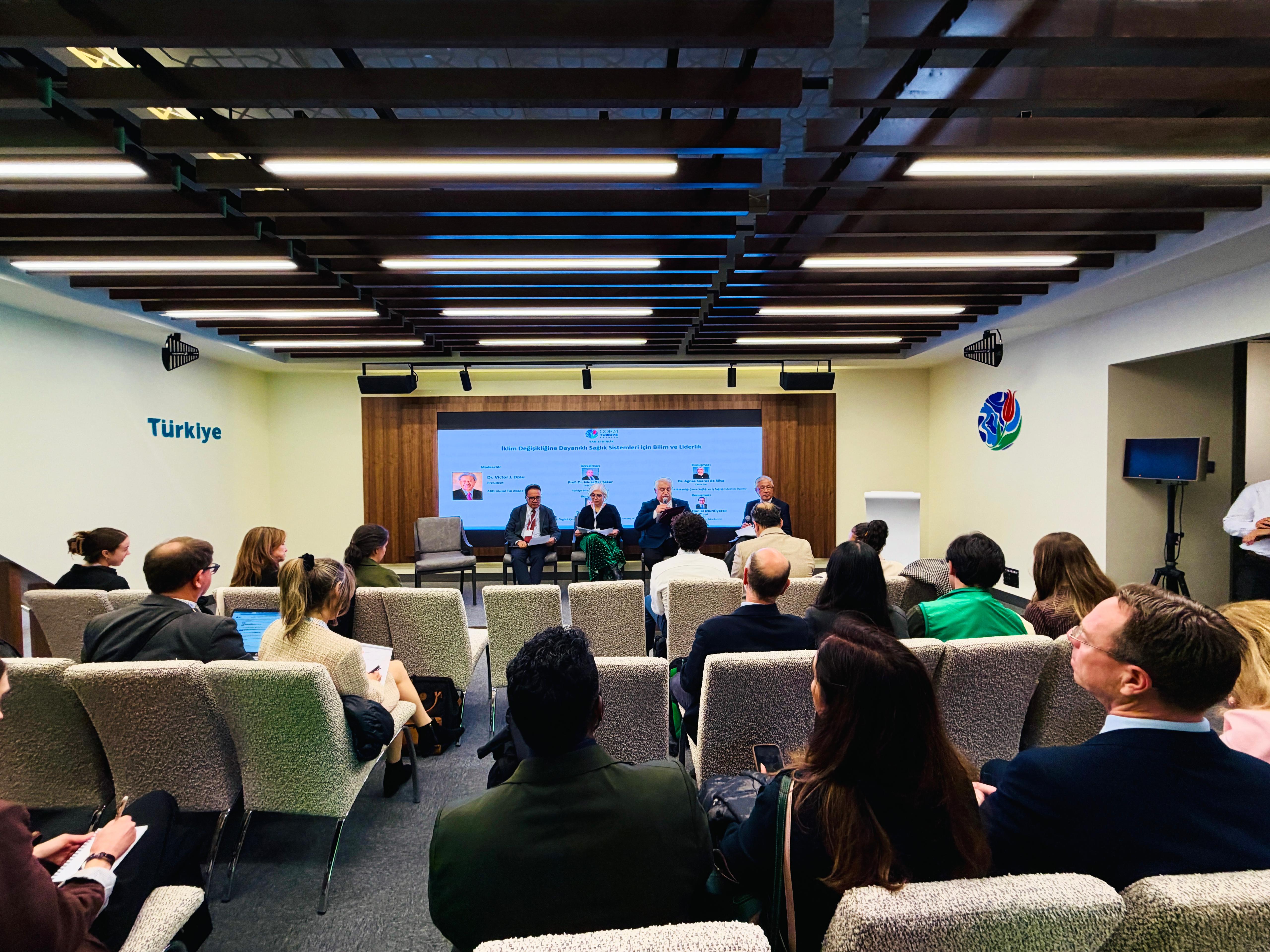
TÜBA President Prof. Dr. Muzaffer Şeker spoke at the international event titled “Science and Leadership for Climate-Resilient Health Systems” held in Antalya as part of the United Nations Framework Convention on Climate Change’s 31st Conference of the Parties (COP31). Noting that the climate crisis is also a health crisis, President Şeker emphasized that scientific academies must play an active role in shaping climate-health policies through independent scientific advisory services, strengthening national research capacity, and fostering equitable international collaborations.
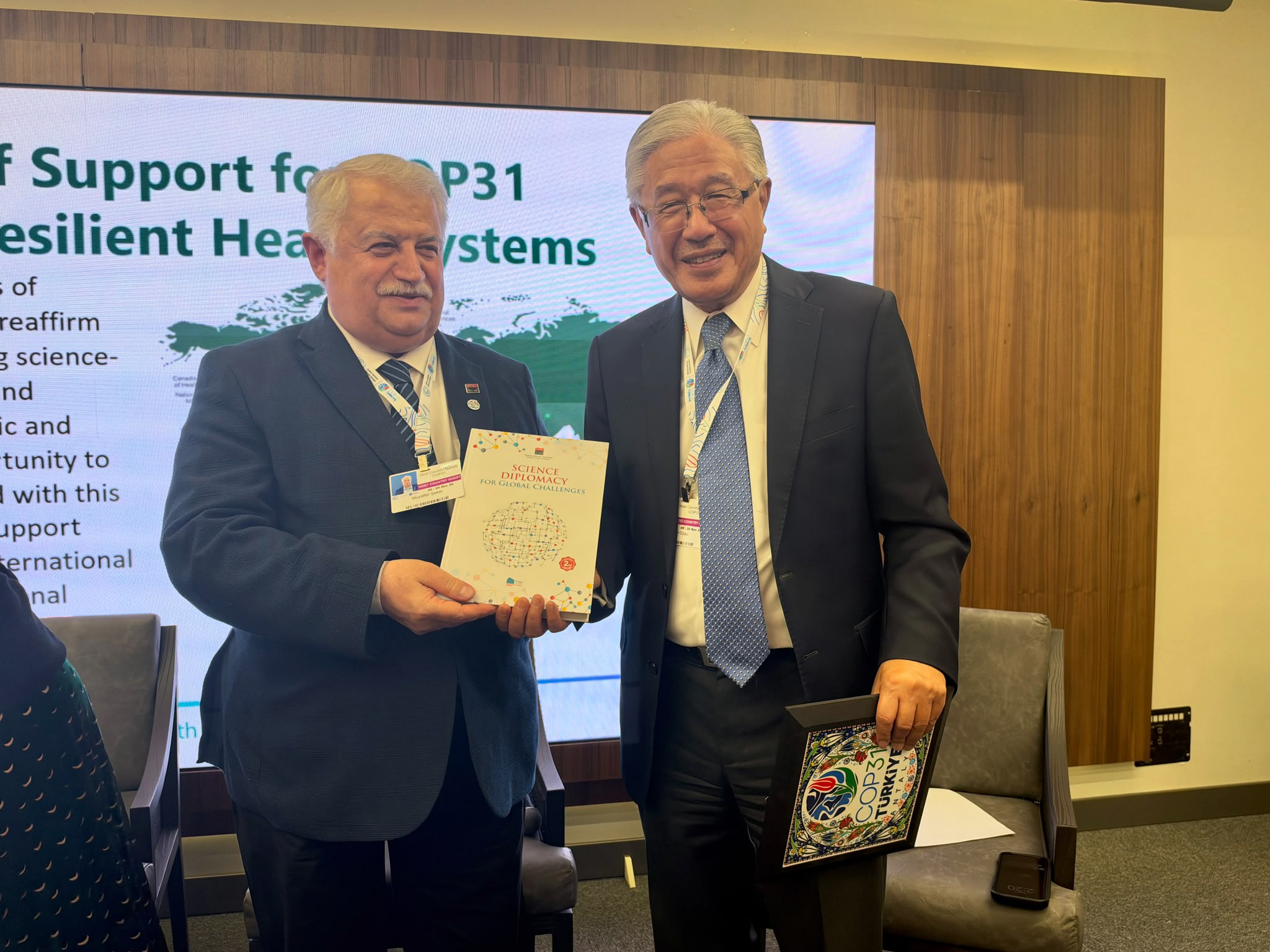
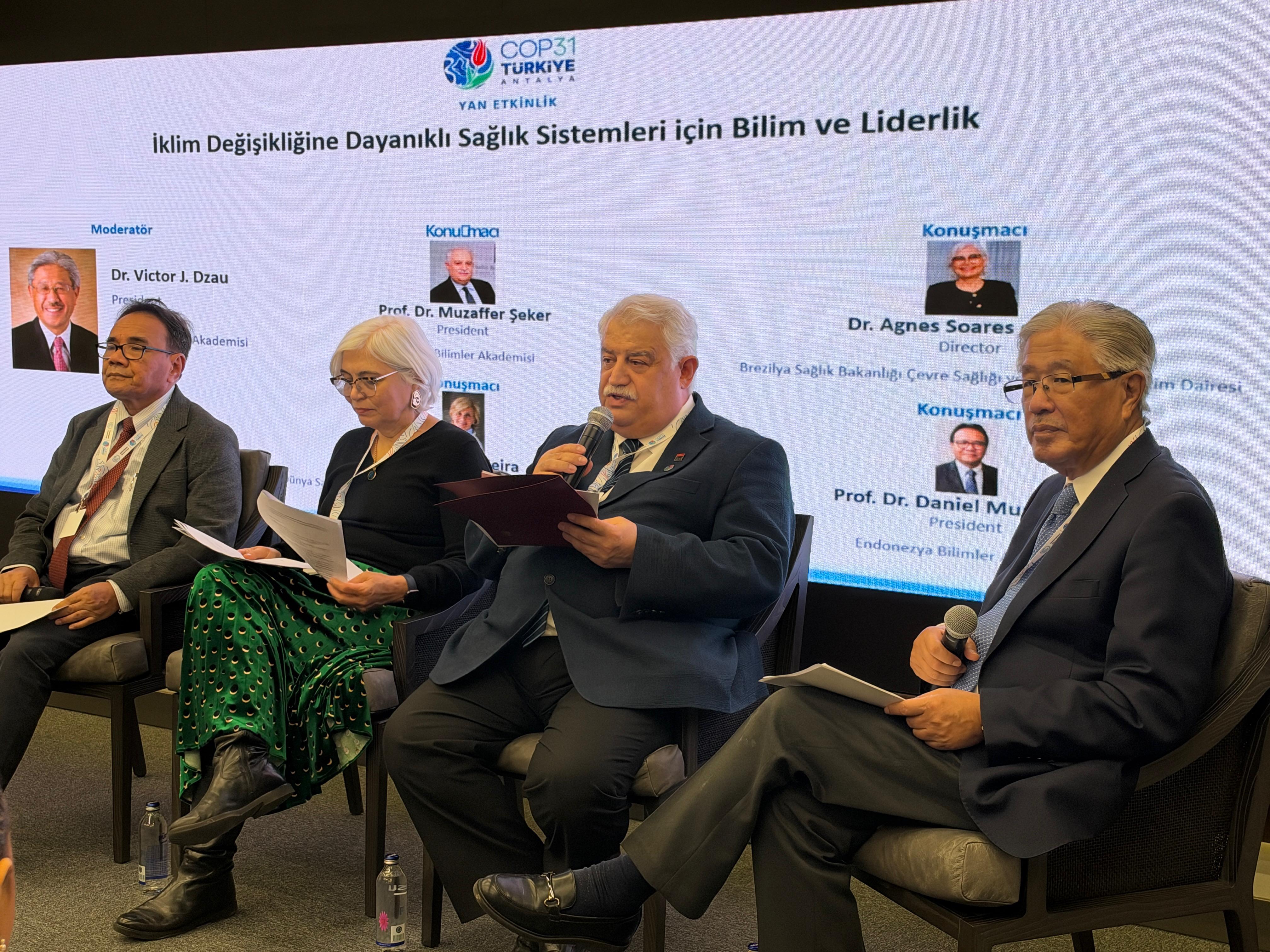
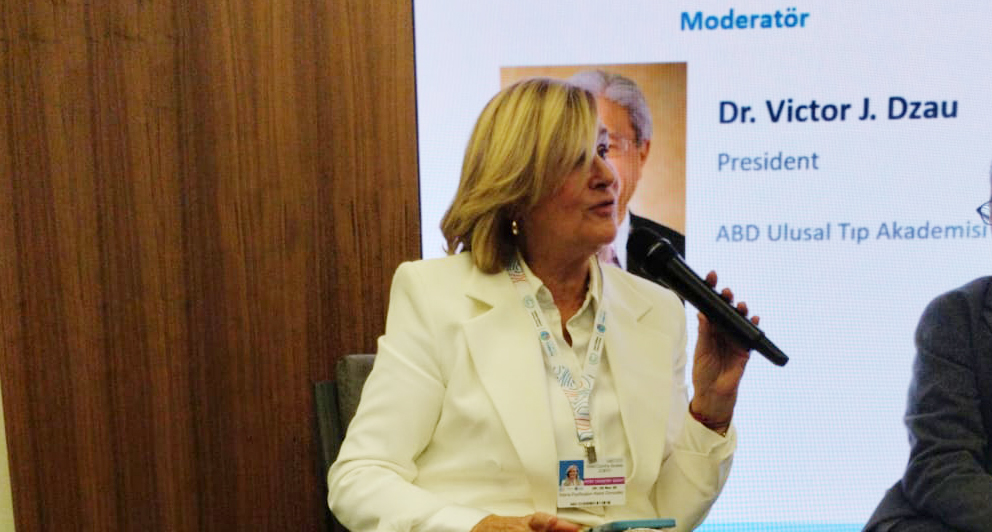
The event, held on November 9, 2026, at the Blue Zone Türkiye Pavilion, was moderated by Dr. Victor J. Dzau, President of the U.S. National Academy of Medicine. In addition to TÜBA President Prof. Dr. Muzaffer Şeker, the panel featured Dr. Agnes Soares da Silva, Director of the Department of Environmental Health and Occupational Health Surveillance at the Brazilian Ministry of Health, Dr. Maria Neira, Director of the Department of Environment, Climate Change, and Health at the World Health Organization and ATACH Global Champion; and Prof. Dr. Daniel Murdiyarso, President of the Indonesian Academy of Sciences.
The session addressed the development of commitments in the fields of climate and health, the identification of priorities for building resilient, equitable, and sustainable health systems, and the role of scientific leadership and international cooperation in this process, while also evaluating the impacts of climate change on health systems and potential solutions.
“The Climate Crisis Is Also a Health Crisis”
Beginning his speech by highlighting the health dimension of the climate crisis, TÜBA President Prof. Dr. Muzaffer Şeker stated that heat waves, droughts, floods, and wildfires directly affect human health; furthermore, they threaten food and water security, disrupt ecosystems, and increase the spread of certain infectious diseases.
Recalling that, according to World Health Organization data, approximately 489,000 heat-related deaths occurred worldwide each year between 2000 and 2019, Şeker noted that the elderly, children, outdoor workers, and communities with limited resources are more vulnerable to climate-related health risks. Emphasizing the need to adopt the “One Health” approach to address these issues, Şeker stated that human, animal, plant, and environmental health cannot be considered in isolation from one another. He noted that the One Health approach must not remain merely a concept but must evolve into a governance model that brings together ministries, local governments, universities, research institutions, and science academies.
TÜBA: Bridging Science and Policy
Assessing the contribution of science academies to climate and health policies under three main headings, Şeker first stated that independent scientific advisory services must be more fully integrated into policy-making processes. Noting that academies can provide governments with reliable scientific evidence and long-term assessments by bringing together expertise from various disciplines, Şeker stated that climate and health issues require collaboration among public health, environmental sciences, agriculture, engineering, and the social sciences.
Referring to the work carried out by TÜBA in this regard, Şeker cited the “Report on Climate Change and Public Health in Türkiye,” published in 2020, and the “The Synthesis Report on COP31 Action Agenda Targets” published for the event, as examples. He noted that the synthesis report presents science-based recommendations and action roadmaps in six areas, including climate-resilient cities, electrification, the circular economy, climate education, and climate finance. He emphasized that cleaner energy, well-planned cities, and resilient infrastructure also contribute to the creation of healthier societies. Secondly, Şeker stressed the need to strengthen preventive health services and national institutional capacity, stating that climate-resilient health systems must not only respond to crises but also be capable of reducing risks before they escalate into emergencies. He noted that in Türkiye, the complementary roles of TÜBA, TÜBİTAK, and TÜSEB in the areas of scientific advisory services, the provision of research funding, and the transfer of knowledge into practice serve as a model for this collaboration. Highlighting equitable international scientific collaboration as the third key point, Şeker noted that climate-related health risks transcend borders, yet countries do not have equal capacity to combat these risks.
Emphasizing that every country must be able to generate its own scientific evidence, train its own researchers, and set its own priorities, Şeker noted that sustainable and climate-resilient health systems cannot be imported from outside; they must be built using local knowledge, institutions, and expertise.
“Academies Can Serve as Bridges”
Responding to a question from moderator Dr. Victor J. Dzau about how scientific academies can increase the influence of national research institutions on climate and health policies, particularly in low- and middle-income countries, Şeker shared three concrete recommendations.
First, Şeker proposed the establishment of “One Health” councils that bring together ministries of health, agriculture, and the environment, noting that scientific academies could serve as the scientific secretariats for these councils. He emphasized that scientific advisory roles should not be merely a mechanism resorted to only when needed, but should become a regular part of budgeting and planning processes. Second, Şeker emphasized that countries need regional scientific evidence and data systems that reflect their own conditions. Noting that a heat wave can have varying effects across different regions, he said that every country must train its own researchers and develop its own capacity to generate data. Citing the division of labor among TÜBA, TÜBİTAK, and TÜSEB in Türkiye as an example of this model, Şeker highlighted the complementary roles these institutions play in scientific advisory services, research funding, and implementation. Şeker stated that his third recommendation was equal partnership, noting that researchers from low and middle income countries should participate in international projects not merely as data collectors, but as partners who define research questions and guide scientific processes. He noted that young doctors who received their education in Türkiye and returned to their home countries have made concrete contributions to this kind of collaboration. Şeker concluded his response by saying, “In short: establish councils, generate data, and invest in people. Academies can serve as bridges in all three of these steps.”
“Success Should Be Measured by the Lives We Save and the Resilience We Build”
In the closing segment of the panel, Şeker shared his assessments regarding the most important steps needed to advance work in the fields of climate and health, stating that it is now time to move from the stage of recognizing the climate-health issue to the stage of achieving measurable results.
Noting that the responsibility of scientific academies is not limited to preparing reports and recommendations, Şeker stated that they must assist governments in setting priorities, evaluating the impact of their policies, and monitoring progress. He also highlighted the importance of forging stronger ties between scientific research, health professionals, and decision-makers. Stressing that scientific progress should benefit all countries, not just those with greater resources, Şeker noted that the success of efforts in the fields of climate and health should be measured not by the number of strategies developed, but by the lives saved and the resilience built.
.jpeg)
.jpeg)
.jpeg)
.jpeg)
.jpeg)
.jpeg)