

Hümâyûn-nâme
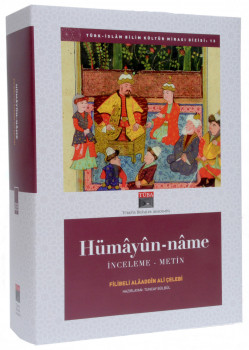
Hümâyûn-nâme, a 16th-century Turkish translation of the world-famous Kelile ve Dimne (Kalila and Demna) stories, has remained a part of Turkish cultural consciousness for centuries thanks to its aesthetic qualities. The primary reason the work has remained relevant for so many centuries is that it stands as one of the finest examples of classical Turkish prose. In terms of content, the work undoubtedly possesses unique value. However, the Hümâyûn-nâme did not merely rely on narrative; rather, as the stories were told, the most precious gems of language were, so to speak, drawn from the ocean of meaning and presented to the reader. This characteristic also earned the Hümâyûn-nâme a worldwide fame that will never fade. The work succeeded in establishing a major school and tradition not only in the realm of prose but also in the field of miniature painting. Translated into many Western languages, Hümâyûn-nâme surpassed Kelile ve Dimne in influence in the West, to the point that these works came to be generally referred to as Hümâyûn-nâme. The work was edited for publication by Assoc. Prof. Dr. Tuncay Bülbül. While the manuscript version of the work is provided on CD, the miniatures found in other copies of the text have also been included in the book.