

Amir Timur and His Legacy
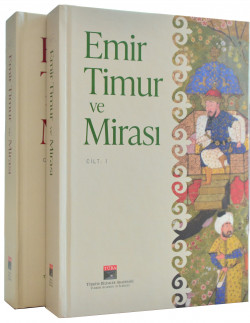
One of the most distinctive features that sets Turkish history apart from other nations is the simultaneous existence of multiple Turkish states in different regions of the world. Each of these states, with their unique characteristics, made various contributions to world history. As they spread across the world, the Turks achieved success not only in the political sphere but also in many different areas of life, leaving an important legacy in various fields with their administrative approaches and cultures.
The work stands out for its scope and content, which covers Turkish history in detail and includes maps of all Turkish states established throughout history for the first time. Completely original and featuring some maps drawn for the first time, the work is dedicated to the 100th anniversary of the Republic of Türkiye.
Edited by TÜBA Full Member Prof. Dr. Feridun M. Emecen, Prof. Dr. Musa Şamil Yüksel, and Prof. Dr. Muhammed Bilal Çelik, the book consists of 33 articles written by 37 academics. It examines the political, military, cultural, economic, and scientific aspects of the Timurid era and its aftermath through the lens of different disciplines, covering a wide range of topics from the organizational structure of the Timurids to architecture, language, literature, and religious life. In addition to detailing Timur as a strategist, it explores his character, leadership, and connections with the Ottoman Sultan Yıldırım Bayezid, who was undergoing the pains of transforming into a great empire, how Timur and Beyazid's paths crossed, and how Timur was defined by his contemporaries in Western and Eastern literature. It presents the states that inherited Timur's empire, the Uzbeks and Mughals, political relations, the Timurid organization and its effects, religious understandings, Sufi structures, architecture, book arts, and the modern image of Timur to the reader from different perspectives.